
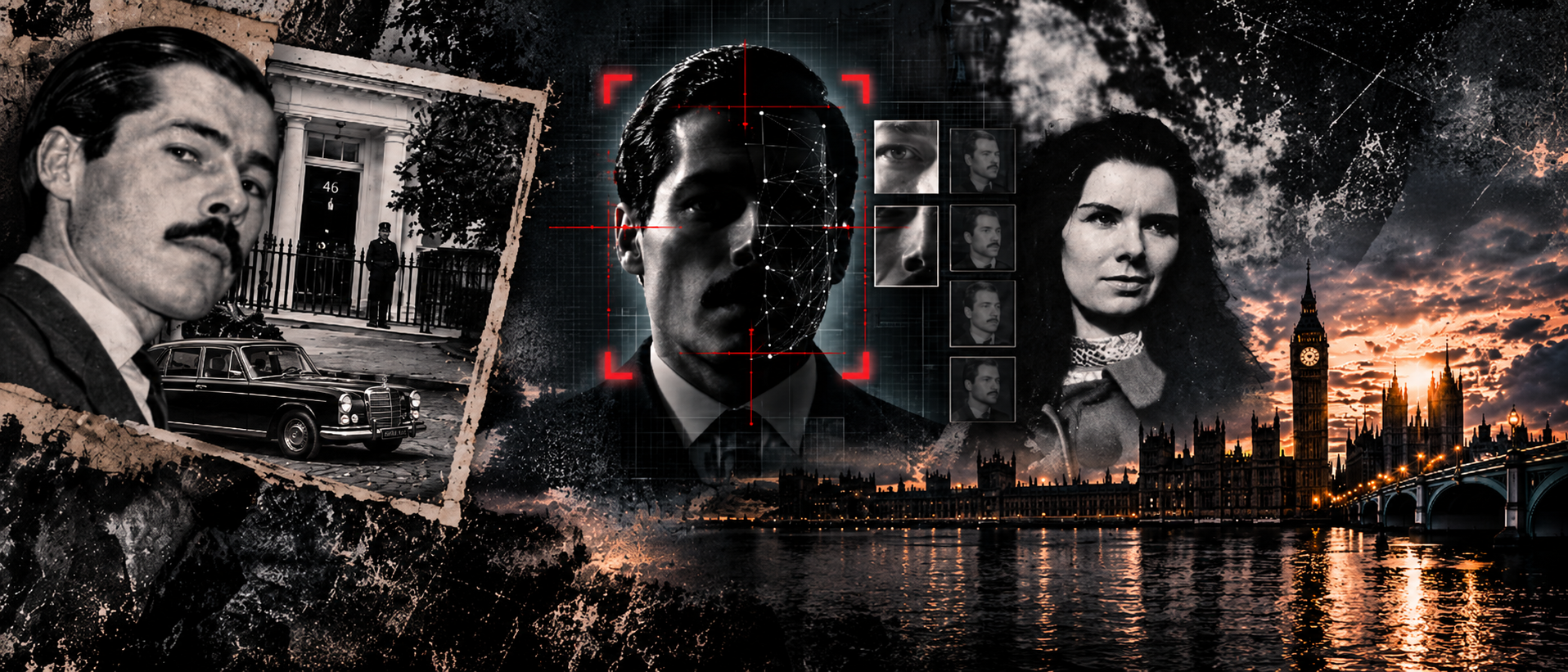
FACIAL RECOGNITION: ONE RULE FOR LONDON, ANOTHER FOR LORD LUCAN?
The Metropolitan Police champions facial recognition technology to identify suspects, make arrests and help bring criminals to justice. So why is the same police force refusing to accept independent forensic evidence that challenges its conclusions in the Lord Lucan investigation?
The Metropolitan Police proudly promotes facial recognition as one of the most powerful tools available to modern policing.
Across London, the technology is used to identify wanted individuals, develop investigative leads and support arrests. The Met has invested heavily in these capabilities and regularly highlights the success of its facial recognition operations.
Crucially, the force also recognises the value of Retrospective Facial Recognition (RFR) — technology that can examine existing photographs and video footage to help establish identities and progress criminal investigations.
Yet in one of Britain's most notorious unsolved murder investigations, the Met appears unwilling even to receive new independent forensic findings that challenge a fundamental assumption about the identity of a man living in Australia.
Why? And how can the Metropolitan Police justify such an apparent double standard?
THE MAN IN AUSTRALIA: IS HE REALLY DEREK CROWTHER?
For years, I have been investigating the possibility that an elderly man living in Australia, publicly identified as Derek Crowther, may actually be the missing Lord Lucan.
The Metropolitan Police has maintained that this individual is Derek Crowther, not Lucan, and has shown no willingness to pursue my continuing investigations.
But there is now a potentially significant development. Rather than accept that position, I continued to pursue the evidence independently, commissioning specialist forensic analysis to establish whether the Australian man really is the person he is said to be. The latest Retrospective Facial Recognition investigations involved internationally recognised companies and specialists with extensive experience in facial recognition technology, including expertise associated with the MIT.
Their findings support the earlier work undertaken by Professor Hassan. Four separate historical photographs of Derek Crowther were compared with images of the elderly man living in Australia. The four photographs of Derek Crowther did not produce a facial recognition match with the Australian man. According to the specialists' reported conclusions, the images represent two separate individuals.
Consider the significance of that finding. The Metropolitan Police maintains that the man in Australia is Derek Crowther. Yet the independent forensic analysis I have commissioned challenges that identification. This does not, by itself, prove that the Australian man is Lord Lucan. Establishing his true identity requires further verification. But if the Australian man is not Derek Crowther, as the latest reports indicate, an obvious question follows.
WHO IS HE?
And surely that question alone deserves proper investigation.
THE MET REFUSES TO ACCEPT THE NEW EVIDENCE
Here is what I find particularly difficult to comprehend.
The Metropolitan Police has not examined these latest reports and formally rejected their conclusions. It is refusing to accept the new evidence for consideration.
That distinction matters. These are not simply personal opinions or unsupported speculation. They are the findings of independent facial recognition investigations commissioned specifically to test the identity of the Australian man.
Yet the Met's existing position, that this individual is Derek Crowther, appears to be preventing the very evidence that challenges that position from being examined.
How can a police force reasonably defend a conclusion while refusing to consider information that could call it into question? New evidence is often the very reason historic investigations are revisited. It can confirm earlier findings, expose mistaken assumptions or open entirely new lines of enquiry.
Surely the answer to conflicting forensic findings is independent examination, not a closed door.
FACIAL RECOGNITION: GOOD ENOUGH FOR LONDON, BUT NOT FOR LUCAN?
The contradiction becomes even more striking when examining the Met's own published policies. The Metropolitan Police openly promotes its use of Live Facial Recognition (LFR) to locate wanted individuals and support criminal investigations.
Its published guidance also explains the use of Retrospective Facial Recognition to help identify individuals from existing images and recordings. The Met recognises that potential matches require human assessment and that technology is an investigative aid rather than conclusive proof of identity.
Those principles are entirely reasonable.
I am not arguing that every facial recognition result should be accepted without scrutiny. Nor am I suggesting that independently commissioned analysis must automatically satisfy the Met's own operational requirements. But how can the reliability of our evidence be assessed when the police will not even accept it for examination?
I am not asking the Metropolitan Police to declare that the Australian man is Lord Lucan. I am asking it to consider independent forensic findings that challenge the identification of that man as Derek Crowther.
If the reports are flawed, explain how.
If the photographs are unsuitable, identify the problems.
If the methodology requires further validation, undertake that assessment.
But refusing to receive the findings leaves serious questions unanswered.
WE ARE PUBLISHING THE FORENSIC REPORTS
Transparency is essential. That is why I am making the independent Retrospective Facial Recognition reports available on this website, so that readers, investigators, forensic specialists, journalists and the wider public can examine the material for themselves.
These reports document the comparisons undertaken and the findings reached by the specialists involved. They include the analysis comparing four photographs of Derek Crowther with images of the elderly man living in Australia.
The conclusions should be considered alongside the underlying methods, the quality of the available images and the limitations inherent in facial recognition technology. I welcome informed, independent scientific scrutiny. If the evidence is wrong, let qualified experts demonstrate why. If the findings stand up to scrutiny, they deserve to be taken seriously.
EXAMINE THE EVIDENCE YOURSELF
The independent Retrospective Facial Recognition reports

University of Bradford
Professor Hassan Ugail of the University of Bradford’s report on the man in Australia

Folio3
Report commissioned by The Mirror on the man in Australia
Folio 3
Report commissioned by Neil on Derek Crowther
DeepFace
Report commissioned by Neil on the man in Australia
FURTHER PHYSICAL EVIDENCE: A DISTINCTIVE NOSE SCAR AND POSSIBLE LEG SURGERY
The facial recognition findings are not the only evidence that raises questions about the true identity of the elderly man living in Australia.
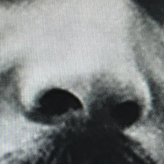
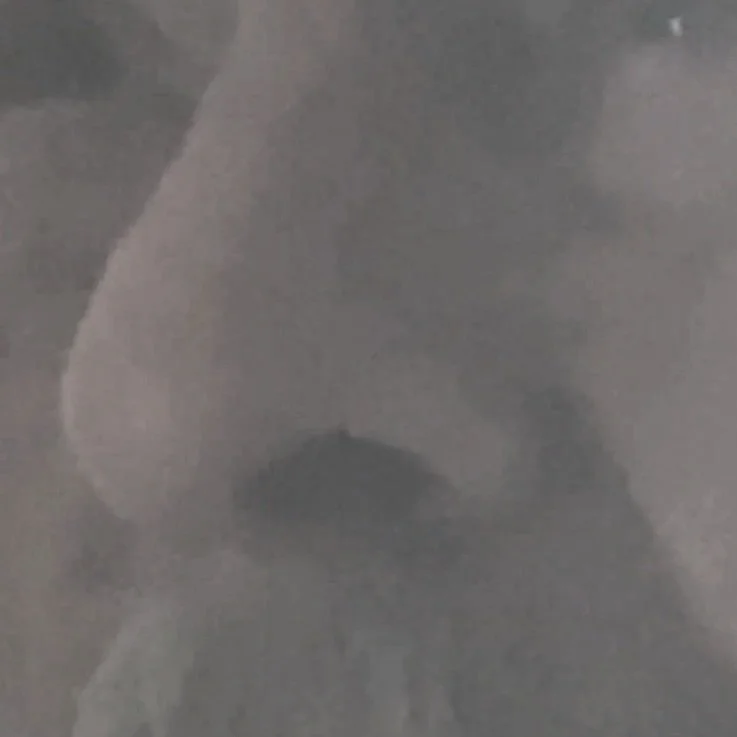
Photographs of the man also reveal what appears to be a distinctive scar on his nose, corresponding to a known feature of Lord Lucan's appearance. This is a potentially important physical characteristic that warrants closer examination, particularly when considered alongside the photographic comparisons and facial recognition findings.
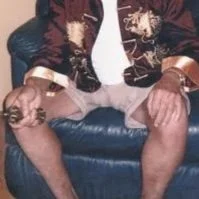
There is also further photographic evidence suggesting possible surgical intervention involving the man's legs, raising the question of whether an operation could have been undertaken to reduce his height. If independently verified, these physical characteristics could provide additional investigative leads in establishing the man's true identity.
I am not suggesting that a scar or the appearance of previous surgery constitutes conclusive proof that the man is Lord Lucan. Nor can photographs alone establish the nature or purpose of any medical procedure. However, these observations deserve to be assessed alongside the independent RFR reports and the wider body of evidence gathered during my investigation.
We now have facial recognition findings challenging the man's identification as Derek Crowther, an apparent nose scar corresponding to a feature associated with Lord Lucan and photographic indications of possible surgery affecting his legs. Taken together, these findings raise questions that warrant proper professional scrutiny.
Yet the Metropolitan Police continues to refuse to accept the latest forensic reports for consideration. How much potentially relevant evidence must be assembled before the Met agrees even to examine it?
Medical notes from 1963 detailing surgical work on Lucan’s nose
Scars are visible on the nose of the old man in Australia.
AN OPEN LETTER TO THE METROPOLITAN POLICE COMMISSIONER
I have now written an open letter to Sir Mark Rowley, Commissioner of the Metropolitan Police, challenging the force's refusal to accept these latest findings. The letter asks several direct questions, including:
Why is the Met refusing to accept new forensic findings concerning the identity of the Australian man?
What evidence supports the Met's identification of that man as Derek Crowther?
How can the force maintain confidence in its conclusion without examining independent findings that challenge it?
Will the Met now accept the reports for independent specialist review?
Will it consider working with Australian authorities to establish the man's identity?
I am asking the Commissioner to ensure the evidence is received, properly assessed and responded to in writing. We are demanding that new evidence is given a fair and professional examination.
THIS IS ABOUT MORE THAN LORD LUCAN
On 7 November 1974, my mother, Sandra Rivett, was brutally murdered at 46 Lower Belgrave Street in Belgravia. Lord Lucan disappeared that night, and the mystery of his whereabouts has dominated headlines, books, documentaries and public speculation for more than half a century. But somewhere along the way, the person who mattered most was overshadowed by the person who disappeared.
My mother was not simply 'the nanny in the Lord Lucan case'. Her name was Sandra Rivett. She was a young woman, a mother and a victim of violent crime. For me, this has never been about solving a celebrity mystery.
It has always been about justice. I have spent years examining documents, tracing witnesses, investigating identities and commissioning forensic work because I believe there are still questions that deserve answers.
The latest evidence concerning Derek Crowther's identity may prove to be an important development. It may also raise further questions that require additional investigation. That is exactly why it should be examined.